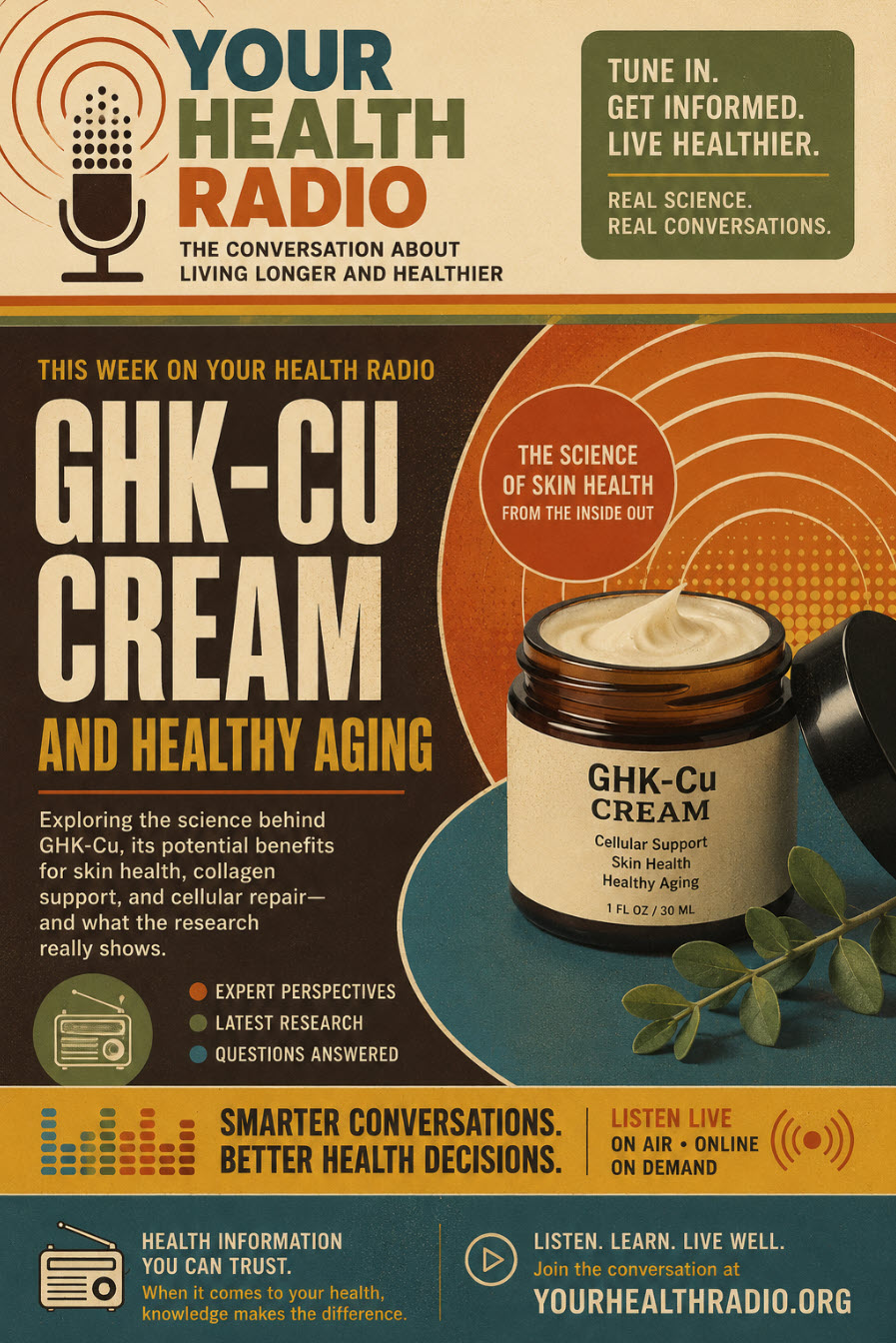
Copper peptides have been part of skincare conversations for decades, but GHK-Cu cream has picked up new attention as interest in longevity and healthy aging has grown. Before looking at what it might do for the skin, it helps to answer the question most readers actually have first.
GHK-Cu cream is a topical skincare product built around GHK-Cu, a naturally occurring copper binding peptide (glycyl-L-histidyl-L-lysine copper) found in the human body. Topical formulations are designed to deliver this peptide complex to the skin, where laboratory and animal research suggests it may interact with pathways involved in skin repair, collagen related activity, and extracellular matrix remodeling. Some of that mechanistic research is well established, while human evidence for specific cosmetic outcomes is smaller in scale and more mixed. In short: GHK-Cu cream is best understood as a researched ingredient connected to skin regeneration processes, not a proven cure for aging skin.
What Is GHK-Cu, the Peptide Behind the Cream?
GHK is a short chain of three amino acids: glycine, histidine, and lysine. Researchers first identified it in human plasma in the 1970s and later found that it binds naturally to copper, forming the complex known as GHK-Cu. This copper bound form is the version most often studied and used in skincare, including in GHK-Cu cream formulated by AgelessRx, which is one example of a commercially available copper peptide product.
GHK-Cu occurs naturally in human skin, saliva, and other tissues, and research has associated it with the body's own repair signaling. Several sources describe levels of the peptide as appearing to decline with age, which is part of why it has drawn interest from researchers studying skin regeneration and skin aging, rather than being treated as a new synthetic invention.
It is worth being precise about the category. GHK-Cu is a signaling peptide, not a moisturizer, exfoliant, or sunscreen ingredient, and it does not replace those categories in a skincare routine. Most topical GHK-Cu peptide cream products position it as a complementary, targeted ingredient rather than an all in one treatment.
Why Is Copper Bound to This Peptide?
Copper is not incidental to how GHK-Cu functions. It is an essential trace mineral involved in several enzyme systems the body uses for tissue maintenance. Two are especially relevant to skin biology.
- Lysyl oxidase. This copper dependent enzyme helps cross link collagen and elastin fibers, a step involved in giving skin's structural network its strength and organization.
- Superoxide dismutase (SOD). A copper and zinc dependent antioxidant enzyme that helps manage oxidative stress, a factor researchers associate with tissue aging and slower repair.
By binding copper in a stable, bioavailable form, GHK-Cu is thought to help deliver this mineral to skin cells in a way that supports these existing repair related systems, rather than introducing an entirely foreign mechanism. This is a reasonable biological rationale, though it describes a pathway of interest rather than a guaranteed cosmetic result.
What Happens to Skin as We Age?
To understand why skin regeneration matters, it helps to understand what actually changes in skin over time. Age associated changes in skin structure generally include:
- Gradual decline in collagen density and quality within the dermis
- Reduced elastin function, which affects skin's ability to spring back into place
- Slower fibroblast activity, the cells responsible for producing new collagen and extracellular matrix components
- Thinning of the dermal and epidermal layers over time
- A less resilient skin barrier, which can affect hydration and sensitivity
- Accumulated oxidative stress from years of sun exposure and normal metabolic activity
None of this happens overnight, and the rate varies significantly between individuals based on genetics, sun exposure, and general health. But collectively, these changes are why skin becomes thinner, less firm, and slower to heal with age, and why skin regeneration and repair capacity, not just surface appearance, are the more meaningful long term concerns.
Why Skin Regeneration Matters for Healthy Aging
Healthy skin aging is not primarily about eliminating every fine line. It is more usefully framed around whether skin can continue to repair itself, maintain its structural integrity, and protect the body as an organ over time.
Viewed this way, skin regeneration research is concerned with several practical questions: Can fibroblasts keep producing quality collagen and extracellular matrix material? Can the skin barrier keep doing its protective job? Can minor damage, from sun exposure, dryness, or everyday wear, be repaired efficiently? These are the mechanisms that ingredients like GHK-Cu are actually being studied against, rather than a promise to make skin biologically younger.
Healthy skin aging is less about erasing time and more about supporting the systems that keep skin repairing itself.
How Might GHK-Cu Interact With Skin Repair Pathways?
This is where most of the research interest in GHK-Cu for skin regeneration is concentrated. A 2018 scientific review of copper peptides in the journal Cosmetics, authored by the researchers most associated with GHK-Cu's discovery, summarized decades of laboratory work showing that GHK-Cu can influence a broad set of genes connected to extracellular matrix composition, wound repair, and antioxidant activity in cultured skin cells.
In these laboratory models, GHK-Cu has also been studied for its potential role in restoring more normal behavior to damaged or stressed fibroblasts, including cells exposed to radiation, and in supporting the body's own tissue remodeling enzymes. Researchers describe this as evidence that GHK-Cu may act as a signal that helps orchestrate repair, rather than a raw material the skin simply absorbs and uses directly.
What Does the Science Say About GHK-Cu and Collagen?
Collagen is one of the most consistent themes in GHK-Cu research, but it is important to separate cell level findings from cosmetic claims. Laboratory studies using human dermal fibroblasts have reported that GHK-Cu can increase measurable collagen and elastin output from these cells at various tested concentrations, alongside changes in enzymes (matrix metalloproteinases and their inhibitors) involved in remodeling the extracellular matrix.
One published study combined this type of cell culture work with a small randomized, double blind human trial: 40 women between the ages of 40 and 65 used a topical GHK-Cu formulation over 8 weeks, with wrinkle depth and volume assessed using 3D imaging. That trial reported meaningful reductions in wrinkle depth and volume compared with a control product over the study period.
The honest summary: laboratory evidence for GHK-Cu influencing collagen related cell activity is fairly robust and consistent. Human evidence that a specific topical cream measurably changes collagen levels or wrinkle depth in the general population is real but comes from a small number of limited studies, not a broad base of large, independent clinical trials.
What Does Research Suggest About GHK-Cu and Wound Healing?
Wound healing is where some of the earliest GHK-Cu research began, largely in animal models. Studies in these models have associated GHK-Cu with faster wound closure, improved tissue organization, and reduced scarring compared with untreated wounds. Researchers have proposed that GHK-Cu supports several overlapping stages of healing, including inflammation regulation, new tissue formation, and remodeling of the healed area.
It is important to note that this body of work is largely preclinical (cell and animal based) and focused on actual wounds, which is a different context from applying a cosmetic cream to intact, aging skin. Your Health Radio does not recommend using cosmetic GHK-Cu products as a treatment for wounds, and anyone with a wound requiring care should speak with a clinician rather than relying on a skincare product.
Can GHK-Cu Support Skin Firmness and Texture?
This is the question most people asking about topical GHK-Cu actually want answered, and it is also where the evidence is most mixed. A small, decades old pilot study compared the ultrastructural effects of several topical creams, including a copper binding peptide formulation, vitamin C, melatonin, and tretinoin, on normal skin. Pilot studies like this one are useful for generating hypotheses, but they typically involve very few participants and are not designed to prove effectiveness on their own.
More recent small trials, including the 8 week study referenced above, have reported visible improvements in wrinkle depth and volume with topical copper peptide use. Taken together, current research suggests GHK-Cu may support skin firmness and texture for some users, without this being an established, guaranteed, or universal outcome the way an approved medication's effects would be documented.
Potential Benefits at a Glance
Based on the laboratory, animal, and limited human research summarized above, researchers have proposed that GHK-Cu may be associated with the following, framed as areas of active study rather than confirmed guarantees:
- Supporting collagen and elastin related activity in skin cells
- Contributing to extracellular matrix remodeling and organization
- Supporting fibroblast function, including in stressed or aging cells
- Assisting antioxidant defense against oxidative stress
- Playing a role in inflammatory signaling associated with tissue repair
- Potentially improving the appearance of skin texture and fine lines in some users
None of these should be read as a promise. They represent the direction the current evidence points, with varying levels of confidence behind each one.
Laboratory Evidence Versus Human Evidence
Because GHK-Cu research spans several very different types of studies, it helps to see the evidence tiers side by side.
| Research type | What it generally shows | Key limitation |
|---|---|---|
| Cell culture (fibroblast) studies | Increased collagen, elastin, and glycosaminoglycan output; altered gene expression tied to extracellular matrix remodeling | Cells in a dish do not fully represent whole, living skin |
| Animal wound healing studies | Faster wound closure and improved tissue organization in some models | Focused on actual wounds, not cosmetic aging skin |
| Small human pilot studies | Early, exploratory comparisons of topical creams on skin structure | Very small sample sizes, not designed to prove efficacy |
| Small randomized human trials | Reported reductions in wrinkle depth and volume with one specific formulation | Limited to one formulation, short duration, not independently replicated at scale |
| Large, independent human clinical trials | Not currently established for commercial GHK-Cu creams | This tier of evidence is the current gap in the research |
How GHK-Cu Compares With Other Skincare Ingredients
GHK-Cu cream is often discussed alongside other well known healthy aging ingredients. None of these ingredients directly replaces another, and most skincare routines that use one of them may reasonably use several, at different times or in different combinations.
| Ingredient | Primary mechanism | Evidence maturity | Typical role |
|---|---|---|---|
| Retinoids | Regulates skin cell turnover and gene expression through retinoic acid receptors | Extensive, including large human clinical trials | Frequently considered a foundational healthy aging ingredient |
| Vitamin C | Antioxidant support; cofactor for collagen synthesis enzymes | Strong laboratory evidence; moderate human evidence | Commonly used for brightness and antioxidant support |
| Niacinamide | Supports barrier function and reduces visible redness or unevenness | Moderate to strong human evidence for barrier related outcomes | Often used for sensitive or barrier compromised skin |
| Peptides broadly | Varies by peptide; generally signaling molecules affecting cell behavior | Wide range, from strong to very limited depending on the specific peptide | Frequently layered as targeted, complementary ingredients |
| GHK-Cu (copper peptide) | Copper delivery peptide linked to extracellular matrix remodeling and repair signaling | Strong laboratory and animal evidence; limited human clinical evidence | Often positioned as a supporting ingredient for skin regeneration and repair |
Where copper peptides may fit is as one part of a broader skin health strategy rather than as a stand alone solution. A reader interested specifically in GHK-Cu skincare is often someone already using sun protection and a basic routine, and looking at copper peptides as an additional, targeted layer.
Limitations of the Current Evidence
A balanced view of GHK-Cu requires being clear about what the research does not yet establish.
- Most mechanistic evidence comes from cell culture, not living human skin
- Human trials that exist tend to be small, short in duration, and limited to a single product formulation
- Independent replication of positive human findings is limited
- Concentration, formulation, and delivery method vary widely between commercial products, and results from one product cannot be assumed to apply to all others
- Long term safety and effectiveness data over years of use has not been established
- Much of the foundational research is decades old and tied to a small number of research groups
None of this means GHK-Cu is ineffective. It means the evidence is still developing, and claims should be sized to match what has actually been studied.
What to Know Before Using GHK-Cu Cream
If you are considering adding a copper peptide cream to a routine, a few general, non-personalized points are worth knowing.
- Patch testing a new product on a small area of skin before full use is a standard, sensible precaution for any new topical ingredient
- Some formulators note that copper peptides and direct acid forms of vitamin C, or strong exfoliating acids, may be better used at different times of day rather than layered together, since the chemistry can interact
- Sunscreen and basic barrier support remain foundational to skin health regardless of which additional ingredients are used
- People with diagnosed skin conditions, known sensitivities, or who are pregnant or nursing should talk with a dermatologist or other qualified clinician before adding a new active ingredient
- Results, where they occur, tend to be gradual, and skincare research generally measures change over weeks to months, not days
Frequently Asked Questions
What is GHK-Cu cream used for?
GHK-Cu cream is a topical skincare product formulated with the copper binding peptide GHK-Cu. It is studied and marketed in connection with skin regeneration, skin repair processes, and the appearance of aging skin, rather than as a treatment for a diagnosed medical condition.
Is GHK-Cu the same as collagen?
No. GHK-Cu is a small copper binding peptide, not collagen itself. Laboratory research suggests GHK-Cu may influence signaling involved in collagen production by skin cells, which is a different thing from applying collagen directly to the skin.
Does GHK-Cu cream actually regenerate skin?
Laboratory and animal research indicates GHK-Cu can influence pathways involved in tissue repair and extracellular matrix remodeling. Human evidence specifically measuring skin regeneration from commercial topical creams is more limited, so it is more accurate to say GHK-Cu is being studied for this role rather than that it is proven to regenerate skin.
Is GHK-Cu cream backed by human studies or mostly lab research?
Most of the foundational evidence on GHK-Cu comes from cell culture and animal research. A smaller number of human trials, generally short in duration and modest in size, have looked at topical copper peptide formulations and skin appearance. Independent, large scale human trials remain limited.
Can GHK-Cu cream replace retinoids or vitamin C?
GHK-Cu cream is not generally positioned as a replacement for retinoids or vitamin C. Each ingredient has a different mechanism and a different depth of evidence, and many skincare routines use them for different purposes rather than as direct substitutes for one another.
Is GHK-Cu cream safe to use?
This article does not provide individualized medical advice. Anyone considering GHK-Cu cream, especially those with sensitive skin, a diagnosed skin condition, or who are pregnant or nursing, should discuss it with a dermatologist or other qualified clinician before use.
The Bottom Line on GHK-Cu and Skin Regeneration
GHK-Cu cream sits at an interesting point in skincare research: a naturally occurring peptide with a genuinely large body of laboratory and animal evidence pointing toward a role in skin repair, extracellular matrix remodeling, and collagen related activity, paired with a much smaller and more preliminary set of human studies on commercial topical formulations. That combination does not make it a miracle ingredient, and it does not make it hype. It makes it a legitimately interesting area of ongoing research.
For readers focused on healthy skin aging, the more useful mindset is thinking in terms of supporting skin's own repair capacity, barrier function, and structural integrity over time, rather than searching for a single product that erases the visible signs of aging. Within that mindset, ingredients like GHK-Cu cream may reasonably be one part of a broader, evidence aware approach to skin health.
Selected sources referenced in this article
- Pickart, L., Margolina, A. "Skin Regenerative and Anti-Cancer Actions of Copper Peptides." Cosmetics, 2018. Read the review
- "Regenerative and Protective Actions of the GHK-Cu Peptide in the Light of the New Gene Data." National Center for Biotechnology Information, PubMed Central. View on PMC
- "Exploring the Role of Tripeptides in Wound Healing and Skin Regeneration: A Comprehensive Review." Journal of Medical Science. Read the review
This section links to publicly available research for readers who want to review primary sources directly. Inclusion here does not imply endorsement of every claim made on third party sites.
Continue the Conversation on Peptides and Healthy Aging
GHK-Cu is one of many peptides being studied in connection with healthy aging. Visit the Peptides hub for more educational coverage, or subscribe to hear about new topics as they are published.